How I Finally Made Healthy Eating Stick — No Gimmicks, Just Real Results
We’ve all been there—starting strong on a health kick, only to crash by week two. I’ve tried every diet trend, but nothing lasted. What changed? I stopped chasing perfection and built small, doable habits that actually fit my life. This isn’t about drastic rules or magic fixes. It’s about making choices that add up. If you're tired of starting over, this approach might be the shift you need. Let’s talk about what really works—without the hype.
The Myth of Quick Fixes in Daily Health Management
For many women juggling family, work, and personal responsibilities, the idea of a quick health fix is incredibly appealing. A 7-day cleanse promises to reset your metabolism. A viral juice fast claims to detox your body in under a week. A celebrity-endorsed meal plan guarantees visible results by your next vacation. These promises are seductive because they align with the way modern life operates: fast, efficient, and outcome-driven. But when it comes to long-term health, especially in the realm of nutrition, speed often undermines sustainability.
The truth is, most short-term diets fail not because people lack willpower, but because the plans themselves are designed to be temporary. They require extreme restriction, eliminate entire food groups, or depend on expensive specialty products that don’t reflect real life. When the novelty wears off, so does the motivation. This creates a cycle—what researchers call “yo-yo dieting”—where weight is lost and regained repeatedly, often leaving individuals feeling more discouraged than when they started.
Consider the common scenario after the holidays. A woman might resolve to “clean up” her eating in January, cutting out sugar, carbs, and desserts entirely. She sticks to it for ten days, proud of her discipline. Then, a child’s birthday party happens. She eats a small slice of cake. The moment she does, the internal narrative shifts: “I’ve already ruined it. Might as well enjoy the rest.” That single indulgence becomes the excuse to abandon the entire effort. This reaction isn’t weakness—it’s the predictable result of an all-or-nothing mindset fostered by quick-fix culture.
What’s more, repeated cycles of restriction and relapse can negatively affect metabolism, increase stress hormones like cortisol, and erode self-trust. Studies have shown that frequent dieting is associated with long-term weight gain, not loss, particularly in adults over 30. The body adapts to scarcity by conserving energy, making future weight management harder. Instead of chasing rapid results, the focus should shift to creating lasting changes that support energy, mood, and overall well-being—not just the number on the scale.
Why Small Habits Beat Big Changes Every Time
If drastic changes rarely last, what does work? The answer lies in consistency, not intensity. Neuroscience has shown that habits are formed through repetition in specific contexts, not through sheer willpower. When a behavior is repeated in the same environment or after the same cue, the brain begins to automate it. This process, known as “neural encoding,” reduces the mental effort required to perform the action over time. In practical terms, this means that drinking a glass of water every morning after brushing your teeth eventually becomes as automatic as the brushing itself.
The key is to start small—so small that the action feels almost effortless. For example, committing to eat one additional serving of vegetables each day is more likely to stick than vowing to “eat clean” or “go vegan.” The smaller the habit, the lower the barrier to entry, and the higher the chance of daily success. Each success reinforces the behavior, creating a positive feedback loop powered by dopamine, the brain’s reward chemical. Over time, these tiny wins accumulate into meaningful change.
Take the simple switch from sugary soda to sparkling water. On its own, this change may seem minor. But over the course of a year, it can eliminate tens of thousands of empty calories and reduce sugar intake significantly—without requiring a complete overhaul of eating patterns. Similarly, adding a handful of spinach to a morning omelet or choosing an apple instead of cookies for an afternoon snack are minimal shifts that, when repeated, reshape long-term dietary patterns.
What makes small habits especially effective for busy women is their flexibility. They don’t require hours of meal prep or a complete kitchen overhaul. They fit into existing routines, making them more sustainable. And because they’re not all-or-nothing, missing a day doesn’t derail progress. The goal isn’t perfection—it’s persistence. Over time, these micro-habits build a foundation of healthier choices that become second nature, not a constant struggle.
Building Your Personalized Eating Framework
One of the biggest mistakes people make is adopting rigid eating rules that don’t align with their lifestyle. Diets that eliminate entire food groups or require constant calorie counting often lead to frustration and burnout. A more effective approach is to create a personalized eating framework—one that emphasizes balance, variety, and flexibility. This isn’t about following a strict set of rules, but about designing a system that supports your body and fits your daily reality.
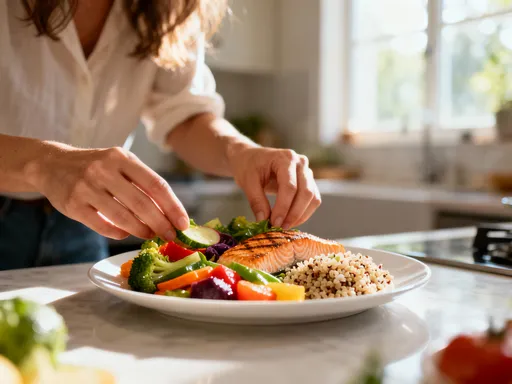
At the core of this framework is the concept of proportion. Instead of labeling foods as “good” or “bad,” the focus shifts to how much and how often certain foods are consumed. A useful tool for this is the “plate method,” recommended by many nutrition professionals. Imagine dividing your dinner plate into sections: half filled with non-starchy vegetables like broccoli, peppers, or leafy greens; one-quarter with lean protein such as chicken, fish, tofu, or beans; and the remaining quarter with whole grains or starchy vegetables like sweet potatoes or brown rice. This simple visual guide ensures nutrient balance without requiring complex calculations.
Equally important is the practice of mindful eating—paying attention to hunger and fullness cues. Many women eat out of habit, stress, or boredom rather than true physical hunger. Learning to pause before meals and ask, “Am I actually hungry?” can prevent overeating and improve digestion. It also fosters a healthier relationship with food, one based on respect and awareness rather than restriction or guilt.
Practical planning supports this framework. Setting aside time each week to plan a few simple meals reduces last-minute decisions that often lead to less healthy choices. Prepping ingredients in advance—like washing and chopping vegetables, cooking a batch of quinoa, or marinating proteins—makes healthy eating easier on busy days. The goal isn’t to cook every meal from scratch, but to remove barriers that make unhealthy options more convenient. When nutritious food is ready and accessible, making the right choice becomes the default, not the exception.
The Power of Environment in Shaping Food Choices
Behavioral science consistently shows that environment plays a powerful role in shaping daily habits, including eating patterns. What we see, reach for, and encounter routinely has a greater influence on our choices than willpower or motivation. For busy women managing households, this means that the design of the kitchen and pantry can either support or sabotage healthy eating goals.
Consider this: if a bowl of fresh fruit sits on the counter, it’s more likely to be eaten than if it’s hidden in the refrigerator drawer. If cookies are stored in a clear jar on the kitchen table, consumption increases. These aren’t random observations—they reflect the principle of “choice architecture,” the idea that small changes in how options are presented can significantly influence behavior. By intentionally arranging the home environment, women can make healthy choices easier and less healthy ones less convenient.
Start with visibility. Place healthy staples like washed grapes, sliced cucumbers, or carrot sticks at eye level in the fridge. Keep reusable water bottles on the counter to encourage hydration. Move sugary snacks to the back of the pantry or store them in opaque containers, making them less tempting. These small adjustments reduce decision fatigue—the mental exhaustion that comes from constantly making choices—especially during stressful or tired moments.
Grocery shopping habits also shape long-term success. Shopping on a full stomach reduces impulse buys, particularly of processed or high-calorie foods. Sticking to a list helps avoid unnecessary purchases, while planning meals in advance ensures that healthy ingredients are always on hand. Additionally, avoiding shopping when rushed or stressed minimizes the likelihood of grabbing convenience foods that may be less nutritious.
Another powerful strategy is preparation. Spending 30 minutes on a weekend afternoon to wash, chop, and store vegetables can save valuable time during the week. Having ready-to-eat options means that when hunger strikes, a quick salad or stir-fry is just minutes away. Over time, these environmental supports create a home ecosystem where healthy eating is the path of least resistance, not a constant battle of willpower.
Navigating Cravings Without Guilt or Deprivation
Cravings are a normal part of life, especially for women navigating hormonal shifts, stress, or fatigue. Yet, they’re often treated as failures—signs of weak willpower or lack of control. This mindset only increases guilt and makes long-term success harder. A more effective approach is to understand cravings as signals, not sins. They can indicate physical needs, like hunger or dehydration, or emotional needs, such as stress relief or comfort.
From a physiological standpoint, sugar cravings often arise when blood sugar drops too quickly. This can happen after eating refined carbohydrates like white bread, pastries, or sugary drinks, which cause a rapid spike and crash in energy. To prevent this, pairing carbohydrates with protein or healthy fats slows digestion and stabilizes blood sugar. For example, eating an apple with a tablespoon of peanut butter provides sustained energy and reduces the urge to snack later.
Hydration is another overlooked factor. Thirst is frequently mistaken for hunger, especially in the afternoon when energy dips. Before reaching for a snack, drinking a glass of water and waiting ten minutes can reveal whether the body truly needs food. Many women find that their cravings disappear after rehydrating.
For emotional cravings, the “10-minute rule” can be helpful. When a strong urge to eat something sweet or salty arises, pause and wait ten minutes. Use that time to walk, breathe deeply, or engage in a brief activity. Often, the craving passes. If it doesn’t, allow yourself a small portion of the desired food—without guilt. Deprivation often leads to bingeing, while moderation builds trust with your body.
The goal isn’t to eliminate treats, but to enjoy them consciously and occasionally. A square of dark chocolate, a small serving of ice cream, or a slice of homemade pie can be part of a healthy eating pattern when consumed mindfully. Normalizing these moments reduces their power and prevents the cycle of restriction and overindulgence.
Making It Last: Consistency Over Perfection
Long-term success in healthy eating isn’t measured by flawless execution, but by consistent effort. No one eats perfectly every day—and that’s okay. The real measure of progress is how quickly you return to your habits after a slip-up. Missing a healthy meal, eating too much at a family gathering, or skipping a planned grocery trip doesn’t erase previous progress. These moments are not failures; they are feedback.
When setbacks happen, the most important step is to respond with self-compassion, not self-criticism. Research shows that individuals who practice self-kindness after a lapse are more likely to get back on track than those who engage in negative self-talk. Instead of thinking, “I blew it, so I might as well give up,” try reframing: “That didn’t go as planned, but I can make my next choice a healthy one.” This mindset shift turns setbacks into learning opportunities, not reasons to quit.
Tracking progress beyond the scale is also crucial. Weight fluctuates daily due to water retention, hormones, and other factors. More reliable indicators of improvement include increased energy, better sleep, improved digestion, and stable moods. Many women report feeling stronger, thinking more clearly, and having more patience with their families after adopting consistent healthy habits. These benefits are often more meaningful than any number on a scale.
Consistency builds momentum. Over time, the small choices—drinking more water, eating more vegetables, preparing more meals at home—compound into lasting change. It’s not about being perfect every day, but about showing up most days. That’s what creates real, sustainable results.
From Habit to Lifestyle: What Changes After 90 Days
After about 90 days of consistent, small changes, something remarkable happens: healthy behaviors begin to feel automatic. The morning walk no longer requires motivation—it becomes part of the routine. Choosing water over soda feels natural. Preparing a simple, balanced meal doesn’t feel like a chore. This is the point where habit transitions into lifestyle.
The benefits extend far beyond physical appearance. Many women notice improved sleep quality, as balanced blood sugar and reduced inflammation support deeper rest. Mental clarity often increases, making it easier to focus at work or manage household tasks. Appetite regulation becomes more intuitive—hunger and fullness cues are easier to recognize, reducing the tendency to overeat.
There’s also an emotional shift. The constant mental chatter about food, guilt, and weight begins to quiet. Eating becomes less about rules and more about nourishment. Food is no longer the enemy, but a source of energy and enjoyment. This peaceful relationship with food is one of the most valuable outcomes of sustainable change.
And because the changes were gradual, they’re more likely to last. Unlike extreme diets that create dependency on willpower, this approach builds resilience. Life events—vacations, holidays, busy weeks—don’t derail progress because the foundation is strong. Healthy choices become the default, not the exception.
This isn’t a diet. It’s a life upgrade. It’s about making choices today that support the energy, health, and well-being needed to fully engage in life—with family, work, and personal goals. The journey isn’t about perfection, but about progress. It’s about designing a way of eating and living that feels good, works for your schedule, and supports your long-term health.