Beyond Lists: How Note-Taking Apps Quietly Transformed My Daily Focus
Have you ever felt overwhelmed by tasks that never seem to end? I did—until I stopped seeing note-taking apps as just digital notebooks. Instead, I began using them to clarify what truly matters each day. It wasn’t about capturing every thought, but about filtering out the noise. This small shift didn’t just organize my to-dos—it brought calm, clarity, and real focus back into my days. And it can do the same for you.
The Overwhelm Before the App: Living in Mental Clutter
Before I found a better way, my mind felt like a browser with 50 tabs open—each one representing a thought, a responsibility, or a half-formed idea. I was juggling work deadlines, my children’s schedules, grocery lists, doctor appointments, and personal goals—all stored in my memory or scattered across sticky notes, napkins, and voice memos. The stress wasn’t from having too much to do. It came from not knowing what to do *right now*. I’d start one task, get interrupted by a text, then remember a bill due tomorrow, and suddenly feel paralyzed. My phone was full of reminders that all said “urgent,” but nothing felt under control.
I remember one Tuesday morning when I missed my sister’s birthday call because three different notes said “call family” but none said *when*. I felt guilty, frazzled, and oddly disconnected from my own life. That was the wake-up call. I realized I didn’t need more reminders—I needed a system that helped me *choose* what to focus on. I wasn’t looking for a digital trash can for my thoughts. I wanted a tool that could help me make sense of the chaos. That’s when I started exploring note-taking apps not just as storage, but as a way to regain clarity and peace.
What I discovered surprised me. It wasn’t about finding the fanciest app with the most features. It was about finding one that worked with my rhythm—my energy, my emotions, and my real-life priorities. The shift wasn’t technical. It was emotional. And once I made that connection, everything started to change.
Discovering the Right Tool: It’s Not About Features, It’s About Function
I’ll be honest—I tried a lot of apps. Some looked sleek, with animated checkmarks and rainbow themes. Others were bare-bones, like digital notepads with no formatting. I downloaded, tested, and deleted at least six before I found one that truly fit. The turning point came when I stopped asking, “What can this app do?” and started asking, “What do *I* need it to help me do?” That simple question changed everything.
The app I finally stuck with wasn’t the most powerful or popular. It didn’t win design awards. But it let me tag my notes by urgency, energy level, and even mood. On low-energy days, I could filter for “easy tasks” and still feel productive without burning out. On busy mornings, I could quickly scan for “must-do today” items and ignore the rest. That ability to sort by how I was *feeling*, not just what I *had* to do, made all the difference.
I also learned that the best tools don’t demand perfection. They welcome imperfection. My app didn’t punish me for skipping a task. It didn’t guilt-trip me with overdue alerts. Instead, it gently showed me what was still there, letting me decide: *Is this still important?* That freedom to reassess without judgment helped me build trust in the system—and in myself. I started each morning with a five-minute “priority scan,” reviewing my notes and choosing just one or two key actions. That small ritual became my anchor, and slowly, my days felt more intentional.
From Capture to Clarity: Turning Notes into Actionable Priorities
At first, I used my note-taking app like a brain dump—writing down every idea, worry, or to-do the moment it popped into my head. But that didn’t reduce my stress. It just moved the clutter from my mind to my phone. The real shift happened when I stopped using the app as a storage bin and started using it as a filter.
I began asking myself a simple question for every note: *Is this something I need to act on, delegate, or let go?* That changed how I thought about productivity. It wasn’t about doing more. It was about doing what mattered. I created three simple labels: “Now,” “Next,” and “Maybe Later.” “Now” was for things that needed my attention today. “Next” was for important but not urgent items. “Maybe Later” became my kindness folder—things I cared about, but didn’t need to carry today.
Over time, I noticed I was less reactive. When a new request came in—like organizing a school bake sale or helping a friend plan a trip—I didn’t say yes automatically. I’d open my app, check my “Now” list, and ask, “Do I have the space for this?” If not, I could politely decline, not out of avoidance, but because I knew what *should* come first. That’s when I realized: clarity isn’t about knowing everything. It’s about knowing what to focus on *right now*. And my app became the quiet voice that helped me hear that.
Building a Habit: How Five Minutes a Day Created Lasting Change
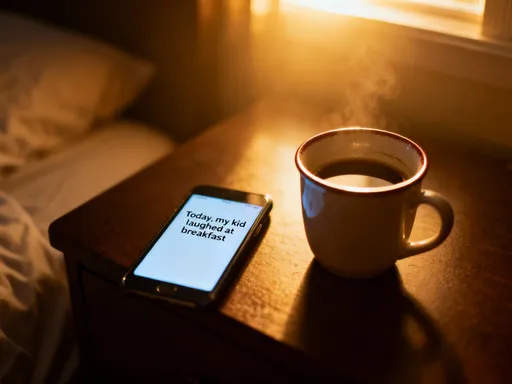
I used to think big changes required big efforts. But what transformed my life wasn’t a dramatic overhaul—it was a tiny, consistent habit. Every morning, before I checked email or scrolled social media, I spent five minutes with my note-taking app. I’d review my “Now” list, set one clear intention, and take a deep breath. That was it. No complicated planning. No pressure to finish everything. Just a moment of presence.
At night, I’d do another five-minute check-in. I’d reflect: *What moved me forward today? What can wait? What am I carrying that I can release?* This wasn’t about scoring points or tracking productivity. It was about tuning in. Over time, this routine became my rhythm. I wasn’t managing tasks—I was managing my attention. And attention, I learned, is the real currency of a meaningful day.
There were days I skipped it. Days when the kids were sick, or work was overwhelming. But the beauty of this habit was its flexibility. I didn’t need to be perfect. I just needed to return to it. And each time I did, I felt more grounded. I wasn’t chasing my day. I was guiding it. That shift—from reactivity to intentionality—was the quiet miracle I hadn’t known I needed.
Sharing the System: How My Family Began to Prioritize Too
One evening, my partner looked at me and said, “You’ve been… calmer lately. What’s different?” I smiled and showed them my note-taking app. I explained how I used color tags—red for high-focus tasks, blue for low-effort ones, green for things that brought me joy. They were intrigued. A week later, they downloaded the same app.
We started small. We created a shared family note titled “This Week’s Anchors.” Every Sunday night, we’d each add one personal priority—mine might be “finish work project,” theirs could be “call mom,” the kids would write “soccer practice” or “art club.” We didn’t use it to nag or control. We used it to align. When my daughter had a recital, I could see it in the shared note and block my calendar. When my partner had a long day, I knew not to add extra requests. It became a quiet way of saying, “I see you. I care about what matters to you.”
The app didn’t fix every challenge, but it gave us a common language. We stopped assuming. We started communicating. And in those small, shared notes, I found something deeper—a sense of teamwork, of mutual respect. Technology, in this small way, became a bridge—not between screens, but between hearts.
The Emotional Payoff: Less Stress, More Space for What Matters
The biggest surprise wasn’t that I got more done. It was that I started *feeling* better. With my priorities visible and decisions simplified, the mental noise faded. I had more patience when my kids spilled juice on the carpet. I was more present during dinner conversations. I noticed the way sunlight hit the kitchen in the afternoon, or how my dog wagged his tail when I walked in the door.
The app didn’t eliminate stress—life still happened. But it gave me a way to respond with clarity instead of panic. When a crisis came, like a last-minute school event or a sick child, I could open my app, pause, and ask: *What’s the one thing I need to handle right now?* That moment of pause made all the difference. I wasn’t drowning. I was navigating.
I also discovered I had more emotional space. Without the constant hum of unfinished tasks in the back of my mind, I could be kinder—to myself and to others. I started saying “I’m proud of you” more often. I wrote little notes of appreciation to my family, tucked into lunchboxes or left on pillows. The app didn’t just help me manage my time. It helped me protect my peace. And in a world that never slows down, that’s a quiet kind of power.
A Simpler, Smarter Way to Live: Making Technology Work for You, Not Against You
Looking back, the real win wasn’t the app itself. It was the mindset it helped me build. Technology, at its best, shouldn’t add noise. It should help you hear yourself more clearly. It shouldn’t distract you from life. It should help you live it more fully. By using a simple note-taking app to focus on what truly matters, I didn’t just become more efficient. I became more intentional, more present, and more at ease.
I’ve learned that smart digital habits aren’t about chasing the latest gadget or mastering complex tools. They’re about choosing small, consistent practices that align with your values. They’re about using technology not to do more, but to be more—more focused, more compassionate, more grounded. And sometimes, the most powerful tech in your life isn’t the one with the most features. It’s the one that helps you breathe a little easier, choose a little wiser, and live a little fuller.
If you’re feeling overwhelmed, I invite you to try this: pick one note-taking app. Spend five minutes each morning reviewing your thoughts. Ask yourself: *What truly matters today?* Let the rest wait. You don’t need to capture everything. You just need to focus on what moves your heart forward. Because in the end, a well-lived day isn’t measured by how much you check off. It’s measured by how deeply you live it. And sometimes, all it takes is one quiet app to help you remember that.