Organized Our Block Party in 2 Hours Using a Simple QR Code System
Remember the last time you tried to plan something small with neighbors—like a potluck or kids’ playdate—and it turned into endless group chat chaos? I did too—until I discovered how a tiny QR code could replace dozens of messages, sign-up sheets, and reminder calls. It’s not magic, just smart use of everyday tech. Now, what used to take days of coordination happens in hours, and the whole community feels more connected. Let me show you how this small change made a big difference.
The Chaos of Planning Small Community Events
Planning even the smallest gathering used to feel like running a small business. I remember last summer, I wanted to organize a simple block party—grills, some lawn games, maybe a little music. I started a group chat with about ten neighbors. Within hours, it exploded. Messages were flying: “Who’s bringing chairs?” “Can we do gluten-free options?” “Is the street closed to cars?” “I can’t come after 6.” I was scrolling through my phone at midnight just trying to keep track. By the time the day arrived, half the people said they’d forgotten, two neighbors showed up with the same dish, and no one had thought about trash bags. The party wasn’t a disaster, but it wasn’t joyful either. It felt like work—my work.
What really got to me wasn’t the mess, though. It was the silence afterward. No one checked in. No “Thanks for organizing.” Just back to normal. And that’s when it hit me: we weren’t building anything. We were just surviving the logistics. The emotional cost was real. I felt drained, unappreciated, and honestly, a little resentful. And I know I’m not alone. So many women I talk to—moms, retirees, working professionals—say the same thing. They want connection, but the effort to create it feels too high. We’re all busy, yes, but it’s not just time. It’s the mental load. The back-and-forth. The fear that no one will show up. That’s why so many of us stop trying. We tell ourselves, “Maybe next year.” But next year never comes.
Discovering the Power of a Simple Tool
The idea didn’t come from a tech blog or a fancy app. It came from a farmers market. I was buying tomatoes one Saturday and saw a little sign at the flower stand: “Help us plan the fall festival! Scan here to volunteer.” Underneath was a small square—just a QR code. I scanned it on a whim and landed on a clean, simple form. I could sign up to help with setup, bring baked goods, or just add an idea. No login. No app download. Just a few taps, and I was in.
And that’s when it clicked. Why couldn’t we do this on our block? No more endless texts. No more guessing who’s doing what. Just one place where everyone could see everything. I didn’t need to be the middleman. I didn’t need to chase people down. The system could do the work. The best part? It didn’t require any special skills. I’m not a coder. I don’t even like setting up my printer. But this felt doable. I remember telling my sister that night, “I think I found a way to make our block feel like a real neighborhood again.” She laughed and said, “With a square?” But I could tell she was curious too. That moment shifted something in me—from frustration to hope. What if the tool wasn’t the problem? What if we just hadn’t found the right one?
How We Set Up the QR Code System (Step by Step)
Setting it up took less than an hour. I started with a free online form builder—something simple and safe that doesn’t ask for credit cards or weird permissions. I created a form with clear sections: “What would you like to bring?” with options like drinks, snacks, main dishes, desserts. Then another section: “How can you help?” with choices like setup, cleanup, games, music. I added a spot for allergies and notes—important for families with little kids. I made sure anyone could edit their response later, so if plans changed, no stress.
Once the form was ready, I generated a QR code using the free tool built into the platform. I printed it on regular paper, laminated it with tape (a trick I learned from a teacher friend), and taped it to the community bulletin board by the mailboxes. I also put one on a tree near the sidewalk with a little weatherproof sleeve. I wrote “Scan to join the block party!” with a smiley face. Then I sent one polite message to the group: “No pressure—just scan if you’re interested. Everything’s in the form.” That was it. No follow-ups. No reminders. I let the system do the talking.
The beauty was in the quiet. No more pings. No more “Did you see my text?” People scanned when they wanted. Some did it right away. Others waited a few days. But within 48 hours, the form was full. I could see who was bringing what, who wanted to help with games, even who had extra folding chairs. And the best part? I didn’t have to ask. No guilt. No chasing. It felt respectful—like we were all in this together, but on our own time. I remember thinking, This is what peace feels like.
The First Time It Actually Worked—And Everyone Noticed
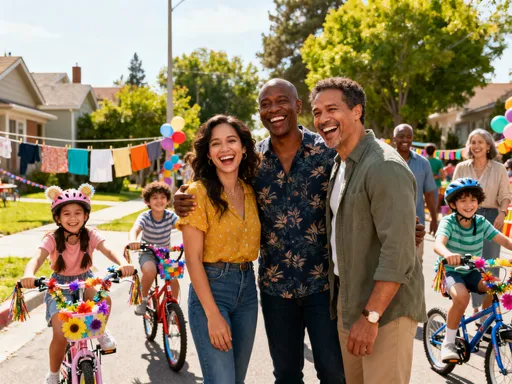
Our first real test wasn’t the block party. It was smaller—a kids’ bike parade for the Fourth of July. Simple. Low stakes. But perfect for trying the system. I set up the form: decorate your bike, bring a bell or horn, sign up for a time slot. I added a spot for parents to note if their child needed a buddy or had a special route request. The QR code went up, and I waited.
And then—it worked. Thirty kids signed up. Not ten. Not fifteen. Thirty. And every parent knew what to do. No one showed up without a bell. No double-booking. The parade started on time. One neighbor, Sarah, pulled me aside and said, “I didn’t have to text anyone. I just scanned, picked our time, and showed up. I knew exactly what to bring, and my daughter felt so included.” Another dad said, “This felt like the neighborhood I remember from when I was a kid.”
But the real win wasn’t the parade. It was what came after. People lingered. They took pictures. They started talking—about school, about summer plans, about who had the best bike decorations. There was laughter. Connection. And no one blamed me for forgetting something. No one said, “Why wasn’t there more water?” Because we’d all been part of it. The system didn’t just organize the event. It built trust. It said, “Your contribution matters. Your voice is heard.” And that changed everything.
Beyond Parties: How This Tiny Tech Improved Daily Life
Once we saw how well it worked, we started using the QR code for more than just events. We created a second one for “Block Help & Updates.” Now, if someone loses a pet, they add it to the form—photo, description, last seen location. Neighbors scan and see it right away. No more frantic posts in the general group. When Mrs. Thompson’s dog went missing last fall, we found him in two hours because everyone had the info at once.
We also use it for sharing—tools, ladders, even extra garden produce. Mr. Patel put up his electric mower for anyone to borrow. All they do is scan, write their name and time, and let him know when they’re done. No awkward knocking on doors. No worrying about being a bother. It’s polite. It’s clear. It works.
And then there’s the emergency contact list—optional, private, and password-protected. We all agreed to share one trusted neighbor’s number in case of power outages, medical issues, or if a child gets home alone. It’s not about fear. It’s about care. It’s knowing that if something happens, there’s a plan. One mom told me, “When my daughter had a fever at night and my husband was away, I texted our block contact. Someone was at my door in seven minutes with soup and a thermometer.” That’s not just convenience. That’s community.
Why This Isn’t Just About Convenience—It’s About Belonging
I used to think strong neighborhoods happened by accident—lucky streets where people just happened to get along. Now I know better. Strong neighborhoods are built. And sometimes, they’re built with something as small as a QR code. This isn’t about tech for tech’s sake. It’s about removing the friction that keeps us apart. It’s about making it easy to say, “I’m in.” “I can help.” “I care.”
Loneliness is real, especially as our kids grow up and move out, or when we’re juggling work and family and feel invisible. But connection doesn’t have to be complicated. It can start with a simple invite: “Scan here to join.” No pressure. No performance. Just presence. One neighbor, a widow named Elaine, told me, “I used to sit inside and watch the world go by. Now I bring the fruit salad every time. I feel like I belong.” That word—belong—mattered. It wasn’t about the food. It was about being seen.
And that’s the deeper truth: when we make it easy to participate, we make it possible to belong. We don’t need grand gestures. We don’t need perfect houses or perfect families. We just need a way to show up. The QR code didn’t create our community. We did. But it gave us a tool to do it without burning out. It gave us space to breathe, to contribute in our own way, and to feel connected without the chaos.
How You Can Start Small (And Why You Should)
You don’t need to start with a block party. Begin with something tiny. A coffee morning. A book swap. A “who wants to split a bulk order of toilet paper?” message. Create a simple form. Generate a QR code. Print it. Post it. Share it once. Then step back.
Use free tools—no cost, no risk. Keep it light. No pressure. Invite people gently: “No need to reply here—just scan if you’re interested.” Let the system do the rest. And don’t worry if only two people join at first. That’s okay. The point isn’t size. It’s the signal: we’re open. We’re here. We care.
I’ll be honest—there’s a little courage in hitting “send” on that first form. What if no one scans? What if it fails? But here’s what I’ve learned: even if no one scans, you’ve still done something important. You’ve said, “I want us to be more than just neighbors.” And that matters. One woman in a Facebook group shared that she put up a QR code for a sidewalk lemonade stand with her daughter. Three neighbors came. She cried afterward—not because it was huge, but because it was real. “They saw us,” she wrote. “They came.”
So yes, start small. Start today. You don’t need a big budget or tech skills. You just need the will to connect. That little square on a piece of paper? It’s not just a code. It’s an invitation. And sometimes, the smallest invitations lead to the biggest changes. Our block isn’t perfect. But it’s alive. And that’s enough.